What sustainable fashion brands manufacture most sustainably in Europe?
The question of where our clothes are made is no longer just a matter of curiosity, but a decisive purchasing criterion. By 2025, Europe will dominate the sustainable fashion market, driven by strict regulations and a strong consumer base committed to sustainability. But what does it really mean to manufacture sustainably in Europe? And more importantly, which brands are doing it well?
Why Europe has become the epicenter of sustainable fashion
European textile production is not simply an alternative to Asia; it is a strategic choice that responds to multiple factors:
Strict regulation and mandatory transparency
The EU wants to reduce textile waste, as well as extend the life cycle of these products and increase their recycling. European regulations on extended producer responsibility, eco-design, and digital product passports are forcing brands to be transparent from design to end-of-life.

Verifiable labor conditions
Unlike Asian supply chains, where the traceability of labor conditions remains a challenge, Europe offers auditable labor standards and fair wages guaranteed by law. This is not a "sustainable extra"; it is the legal minimum.
Lower carbon footprint in transportation
Producing in Spain or Portugal for sale in Europe drastically reduces transport emissions. Compared to transoceanic shipments from Asia, local production can cut the carbon footprint by up to 90% in the logistics phase.
Quick response and circular economy
It is possible to re-localize in Europe, achieving margin objectives, ensuring delivery times, improving quality standards, and adding differentiating value in terms of sustainability and social responsibility. Proximity allows for smaller collections, quick market response, and less overproduction.
The context: the European textile industry in figures
The fashion sector in Spain represents 2.8% of the GDP and 8.2% of the country's exports; furthermore, it directly employs 130,000 workers and has an annual turnover of around 15 billion euros. But it's not just about economic numbers, but a deep transformation towards circularity and sustainability as the basis of production.
What "sustainable manufacturing" truly means in Europe
It's not enough to produce in Europe to be sustainable. True sustainability in European manufacturing includes:

1. Certified materials of verifiable origin
Organic cotton with GOTS or OCS certification, recycled merino wool with Global Recycle Standard, or innovative fibers like Tencel. The crucial thing is that the origin of the material is traceable back to the farm or recycling source.
2. Audited and transparent factories
Not just knowing "it's made in Portugal," but knowing the exact name of the factory, its location, audited labor conditions, and production processes. Truly sustainable brands show their facilities without hiding anything.
3. Low-impact processes
Non-toxic dyes, water treatment systems, use of renewable energy in facilities, minimization of textile waste through zero-waste patterns.
4. Proximity and efficient logistics
Produce less than 1,000 km from the distribution center. Transport by road instead of by plane or ship. Use recycled and recyclable packaging.
5. Economic and fiscal transparency
The most advanced brands not only show where they manufacture, but also how the price of each garment is distributed and where their profits are taxed.
European brands setting the standard

Minimalism Brand (Spain/Portugal): Radical transparency as a business model
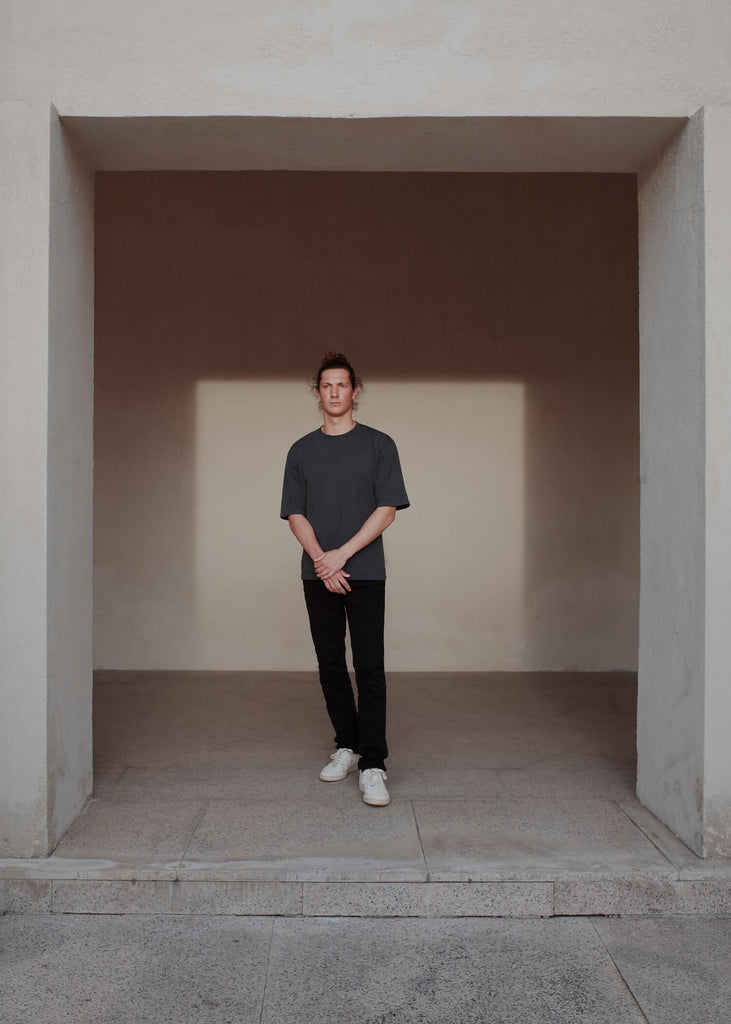
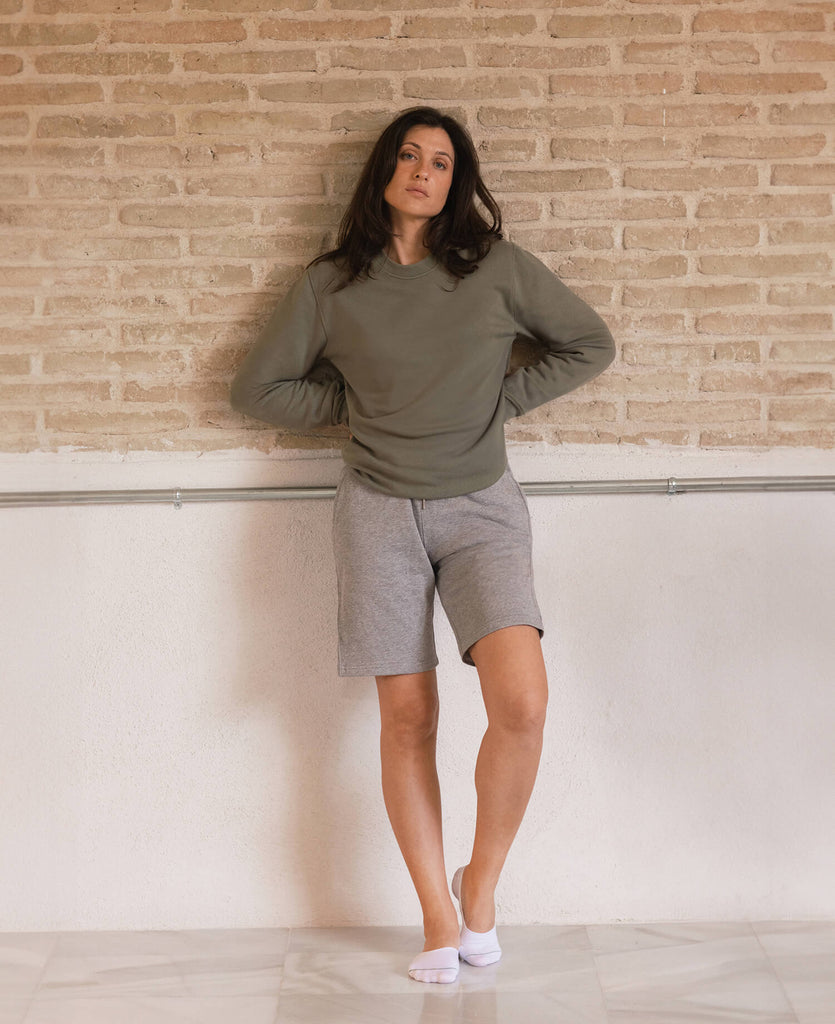
At Minimalism Brand, we have made transparency the central pillar of our model since 2017. By sharing everything through social media, media publications, our blog... in written and video formats... you can see everything about Minimalism, such as:
Our manufacturing:
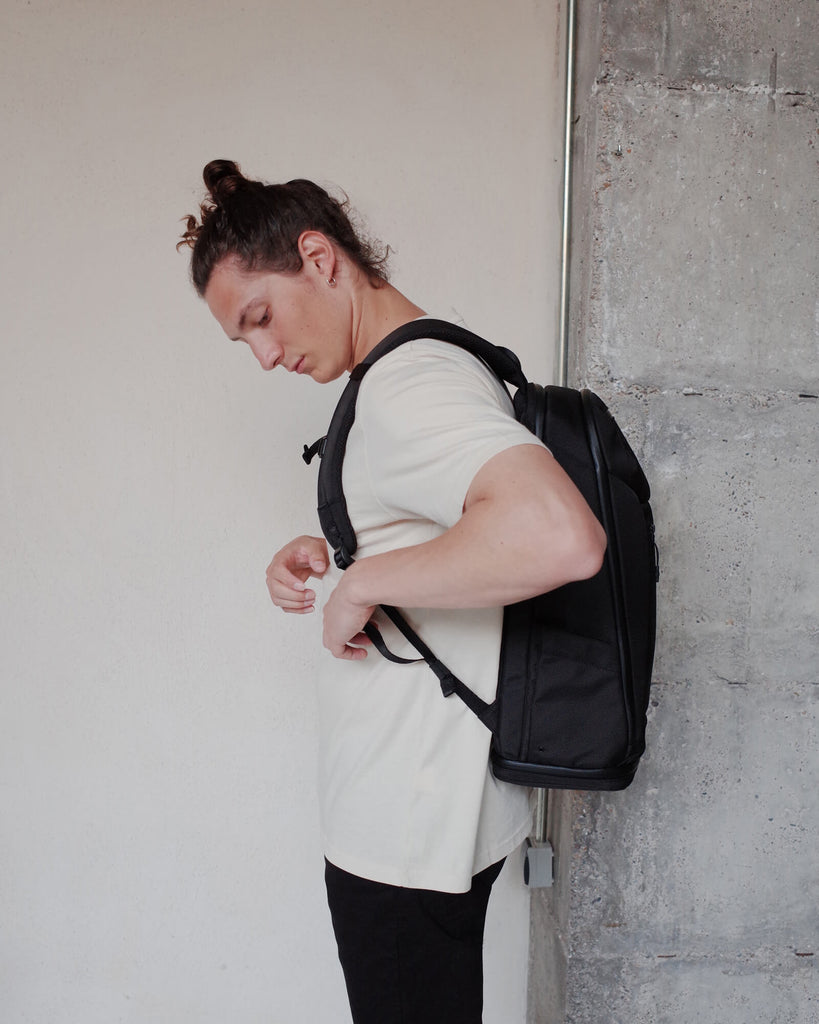
- 98% manufactured in Spain and Portugal, only 2% in Vietnam (backpacks and laptop sleeves where we still haven't found a European alternative with the necessary quality)
Complete traceability by product:
On each product page, we display information that almost no other brand reveals:
For our organic cotton t-shirts:
- Cotton origin: 50% Turkey, 50% Kazakhstan (we have also worked with Spain and Tanzania)
- Certification: OCS100 (Organic Content Standard 100)
- Environmental audit: Green Story, the same company that audits leading brands like Pangaia
Watch the complete t-shirt creation process in 60 seconds
Economic transparency (a level almost no one achieves):
We break down the price of each product on our pages.
Fiscal transparency:
We are a Spanish company that pays all its taxes in Spain, because we believe that sustainability also involves contributing to the public system of the country where we operate.
Beyond sales:
- Repair service: We reimburse the cost of repairs carried out in local workshops
- Zero Textile Waste: We collect used clothing (from any brand) and give it a second life
Learn about our manufacturer selection process | See inside our factories

SKFK / Skunkfunk (Basque Country, Spain)
A pioneering Basque brand founded in 1999 that represents one of the most interesting cases of sustainable transformation. In 2003, they traveled to China to inspect one of their manufacturing workshops and decided to completely change their production model when they realized that those conditions did not align with their values.
Their model:
- Production mainly in Spain and Portugal
- Materials: organic cotton, recycled polyester, Tencel
- Traceability to the origin of textiles
- Timeless designs that avoid fast trends

Ecoalf (Madrid, Spain)
Probably the most internationally known Spanish brand in the field of sustainable fashion. Their differentiator: creating fashion from marine waste.
Their approach:
- Manufacturing in Spain (mostly)
- Materials: plastics recovered from the sea, recycled fishing nets, recycled tires, post-consumer cotton
- Active communication about environmental impact with verifiable data
- Collaborations with fishermen to recover waste from the ocean

Thinking Mu (Barcelona, Spain)
A Barcelona-based brand that produces in small local workshops with a fair trade philosophy and conscious design.
Their model:
- Manufacturing in workshops in Barcelona and its surroundings
- Certified organic and recycled materials
- Small collections and on-demand production for some products
- Transparency in suppliers
Here we interview Pepe Barguñó, and analyze all the keys to Thinking Mu

Hemper (Barcelona, Spain)
A brand specialized in hemp, one of the most sustainable materials available.
Their differentiator:
- Main material: hemp (requires little water, no pesticides, regenerates soil)
- Local production in Barcelona and its surroundings
- Verifiable sustainability reports
- Transparency throughout the chain

Lanius (Germany)
With more than 25 years of experience, Lanius is a benchmark for sustainable fashion in Central Europe.
Their model:
- Certifications: GOTS, SA8000, Fair Wear Foundation
- Materials: certified cotton, wool, hemp and Tencel
- Production in audited Romanian factory
- Completely CO₂-free
Emerging European brands worth knowing

Shoko (Greece)
A Greek brand of timeless basics with a focus on extreme durability.
Their philosophy:
- Garments designed to last a lifetime
- Production in Europe
- High-quality materials
- Minimalist Mediterranean design
How to identify a brand that truly manufactures sustainably in Europe
Don't just trust the "Made in Europe" claim. Verify:
Real transparency checklist:
- Do they publish the exact name and location of their factories? If they just say "made in Spain" without more details, it's insufficient.
- Do they show material AND manufacturing certifications? You need OCS/GOTS for materials and Fair Wear/SA8000 for labor conditions.
- Do they have third-party environmental impact audits? Such as Green Story, bluesign, or similar.
- Do they publish the distance between factory and distribution center? This indicates they truly care about the carbon footprint of transportation.
- Do they offer product traceability? The best brands specify the origin of materials product by product, not with generalities.
- Do they break down the price? Although few do, it is the highest level of transparency.
- Do they have repair or recycling programs? Sustainability does not end with the sale.
The difference between European and Asian production
It's not about demonizing Asia, but about understanding the structural differences:
Production in Europe:
- ✅ Decent wages by law
- ✅ Strict environmental regulations
- ✅ Easier and more frequent audits
- ✅ Lower transport footprint
- ✅ Shorter production times
- ✅ Smaller batches (less overproduction)
- ❌ Higher production cost
Production in Asia:
- ✅ Massive scalability
- ✅ Developed industrial infrastructure
- ✅ Lower production cost
- ❌ Frequent low wages (though improving in China)
- ❌ Less strict environmental regulations in many countries
- ❌ Labor audits more difficult to verify
- ❌ High carbon footprint due to transoceanic transport
- ❌ Large batches (risk of overproduction)
While countries like China and Bangladesh offer low-cost production, countries like Italy and the USA offer innovative design and sustainability.
The future: nearshoring and reshoring
We can be competitive by reshoring textile production in Europe. The trend is clear: brands are bringing production back not out of nostalgia, but for efficiency, quality, and consumer demand.
Countries like Portugal, Spain, Turkey, Poland, and Romania are becoming the new hubs of sustainable European production, combining:
- Artisanal tradition
- Modern technology
- Proximity to key markets
- Regulations favorable to sustainability
Conclusion: Europe as a laboratory for the fashion of the future
Europe is not simply an alternative production location; it is the epicenter where what it means to make fashion responsibly is being redefined. Increasingly strict regulations, increasingly demanding consumers, and increasingly transparent brands are creating an ecosystem where sustainability is not optional.
At Minimalism Brand, we believe that the future of fashion lies in radical transparency. It's not about being perfect, but about showing every step of the process so that consumers can make informed decisions. We manufacture 98% of our products in Spain and Portugal not for marketing, but because it is the only way to maintain the quality control, labor conditions, and environmental impact that we want to guarantee.
The question is no longer whether brands should manufacture sustainably in Europe, but when all will do so out of regulatory obligation and market pressure.
Discover our radical transparency:
Our best-selling organic cotton packs