How to tell if a garment will last (before buying it)
Buying clothes is easy.
Buying clothes that last, not so much.
We are buying more and more, but garments are lasting less and less. And that is the problem.
Because the most sustainable garment is not the one with the most labels,
it is the one that stays in your closet the longest.
The good news:
you can actually tell if a garment will last before you buy it.
Durability begins before arriving home
Buying quality clothing isn't just a matter of price.
There are expensive garments that deteriorate quickly,
and others more affordable that last for years.
The difference lies in knowing what to look for.
1. Examine the fabric composition
Start with the tag.
Natural fibers like organic cotton, linen, or wool are usually more durable and breathable than pure synthetics.
There are also blends that work very well:
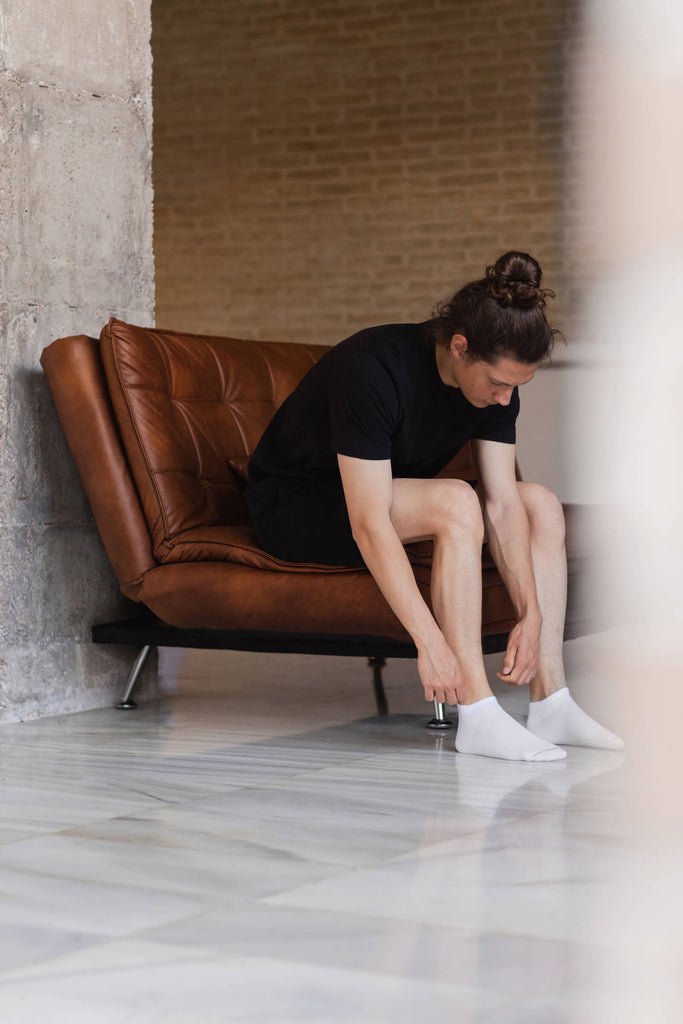
for example, cotton with a small percentage of elastane can provide comfort without compromising durability. For instance, at Minimalism Brand, we add a small percentage of elastane to our organic cotton socks so they adapt to your foot.
A warning sign?
A high percentage of low-quality polyester.
Over time it tends to:
- lose its shape
- develop pills
- retain odors
2. Check the fabric weight (grammage)
Weight matters, even if you don't always see it indicated.
A denser fabric usually lasts longer.
Do a simple test:
hold the garment up to the light.
If you see too much transparency in a garment that shouldn't be sheer,
it is probably not intended to last. T-shirt weights below 150-160 grams can be see-through in light colors, such as white.

3. Observe the seams
Seams are one of the weakest points of any garment.
Look at this:
- Double or reinforced seams in high-tension areas (armpits, crotch...)
- Uniform and firm stitches
- Clean finishes, with no loose threads
A good fabric with bad seams will not last.
For example, at Minimalism Brand, our t-shirts have double stitching on the collar, which ensures it won't curl and will have a longer lifespan (more than 6 years, according to our analysis).

4. Check how it recovers its shape
If you have the garment in person, try stretching it slightly and then release it.
A quality fabric:
- returns to its original shape
- maintains its structure
If it stays misshapen, it will only get worse with use.
If you are buying online, look at the drape of the garments in the product photos.
5. Check the finishes
The details say much more than they seem.
- Buttons sewn well (in an X shape)
- Clean hems
- Sturdy zippers (like YKK)
When a brand takes care of this, they usually take care of everything else. For example, all our backpacks, toiletry bags, and laptop sleeves feature heat-sealed YKK zippers, the best on the market.

6. Smell the garment
It might seem strange, but it works.
If you are in front of the physical garment and it has a strong chemical smell, it may indicate aggressive treatments that will disappear with washing... along with part of the fabric's quality.
Well-made garments usually have a neutral scent. For instance, at Minimalism Brand, we use natural dyes and you will never perceive those chemical smells.
If you are buying online, check the reviews for any ratings of this type that might raise alarm bells. At Minimalism Brand, we are very committed to giving our customers a voice, and for products like our t-shirts, we have already accumulated more than 530 positive reviews, where customers share everything: if the fit was good, if the size they chose was too small, if they "have never had a t-shirt with a better feel," if the product arrived quickly... everything.

7. Look beyond the garment
Durability also depends on how and where it is manufactured.
Brands that work with careful processes and a degree of transparency usually offer more consistent products.
Certifications like GOTS or OEKO-TEX can be a good sign.
At Minimalism Brand, durability is our highest priority as a company, let me tell you:
A real-life example: when durability isn't just theory
All of this sounds good in theory.
But the difference lies in applying it.
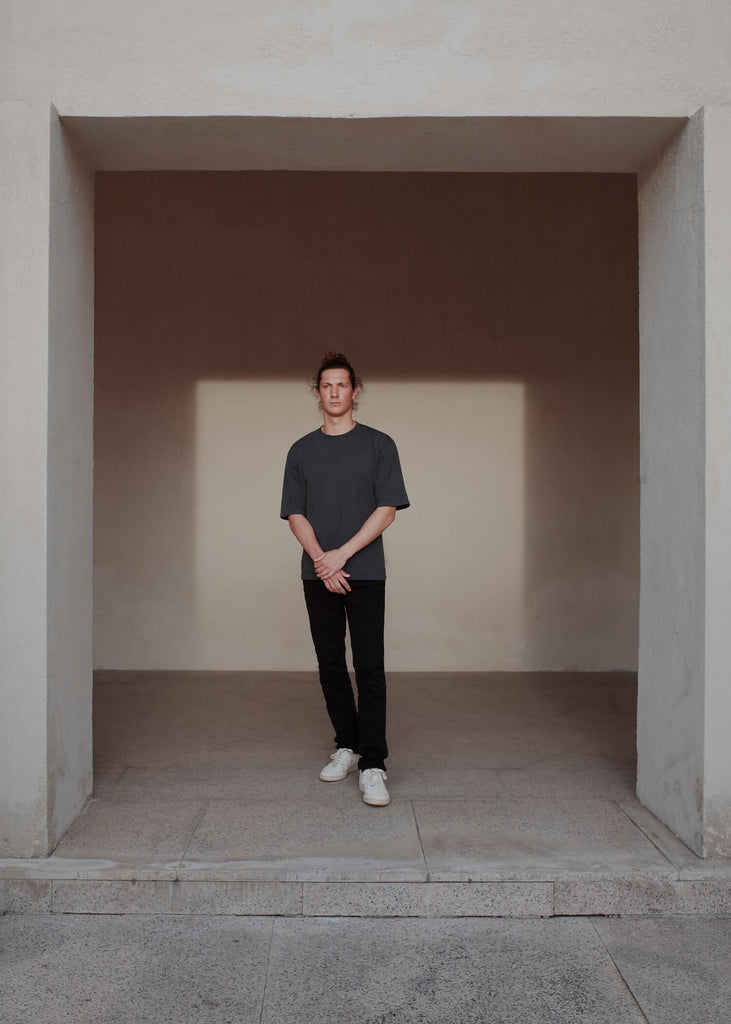
At Minimalism Brand, we have been working with this approach since 2019 with our organic cotton white t-shirts.
- 100% organic cotton (OCS 100 certified)
- 180-gram weight: a balance between strength and comfort
- Relaxed fit and crew neck designed for daily use
- Manufactured in workshops in northern Portugal, with careful processes
Every decision, material, weight, and construction is designed for one thing:
that the garment lasts.
Since their launch in 2019, more than 41,700 units have been sold.
And if we have learned anything in this time, it is that you don't talk about durability.
You demonstrate it through use. And as we mentioned above, with validated data that tells us our t-shirts last more than 6 years with regular use—that is, daily use.
Less, but better
Knowing if a garment will last is not a matter of luck.
It is a matter of paying attention.
Because buying better is not about spending more,
it is about choosing with criteria.
Fewer garments.
More use.
More time in your closet.
Conclusion
Before you buy, stop for a second.
Look at the fabric.
The seams.
The details.
And ask yourself a simple question:
Is this going to last?
If the answer is no, you probably don't need it.
At Minimalism Brand, we design every garment with that idea in mind:
quality materials, good finishes, and careful production.
Because the best garment
is the one you don't have to replace.
Our best-selling organic cotton packs