Best Sustainable Backpacks: The Complete Guide to Waterproof Recycled Backpacks
In a world where millions of tons of plastic waste are produced every year, choosing a backpack made from recycled materials is not just a purchasing decision, it's a statement of principles. Sustainable backpacks are no longer a niche product; they have become the preferred choice for conscious travelers seeking durability, functionality, and low environmental impact.
But not all "eco-friendly" backpacks are created equal. In this comprehensive guide, you'll discover what truly makes a travel backpack sustainable, why recycled polyester is the material of the future, and how to choose the perfect backpack that will accompany you for years without compromising the planet.
Why recycled polyester backpacks are revolutionizing sustainable luggage
Recycled polyester, also known as rPET, has become the star material in the sustainable luggage industry. And it's no coincidence: the numbers speak for themselves.
The real impact of recycled polyester
When we manufacture a medium-sized backpack with recycled polyester instead of virgin polyester:
- We prevent the emission of over 1,500 grams of CO2 into the atmosphere.
- We save 75 liters of water in the production process.
- We reduce the consumption of 400 ml of petroleum that would have been used to produce virgin material.
- We give a second life to approximately 25 PET plastic bottles.
Furthermore, rPET production generates 75% less CO2 emissions and requires significantly less energy than virgin polyester. In a context where every kilogram of recycled plastic prevents the emission of 1.5 kilograms of CO2 into the atmosphere, choosing recycled polyester products has a measurable and real impact.
More information: https://cooverpack.com/en/rpet-material-mas-reciclable-sostenible/

What exactly is recycled polyester (rPET)?
rPET, or recycled polyester, is a material primarily obtained from recycling used PET plastic bottles. The process is fascinating:
- Collection: PET plastic bottles are collected from recycling bins.
- Cleaning and sorting: They are cleaned, labels are removed, and they are separated from other plastics.
- Shredding: The clean plastic is shredded into small flakes or chips.
- Pelletizing: The flakes are melted and transformed into small pellets.
- Spinning: The pellets are melted again and spun into polyester yarn.
- Weaving: This yarn is then used to create the fabric for the backpack.
The result is a material that, in terms of performance, is practically identical to virgin polyester: the same strength, durability, and versatility. But with a drastically lower environmental impact.

Minimalism Brand: 5 years crafting sustainable backpacks that last
At Minimalism Brand, we have been manufacturing backpacks and accessories with recycled polyester for over 5 years. It's not a recent trend or an "eco" line within a conventional catalog: it's how we've done things from the very beginning.
Our philosophy: less is more, especially when traveling
Due to our minimalist philosophy, we are very clear that less is more, especially when it comes to traveling. Travel backpacks with a minimalist design not only reflect a clean and simple aesthetic but also promote a lighter and more hassle-free travel experience.
Our goal: to create backpacks that will accompany you for years, withstand the wear and tear of constant travel, and, when their useful life finally ends, can be recycled to become new products.
Materials: certifications that matter
It's not enough to just say a backpack is "eco-friendly." At Minimalism Brand, we back every claim with verifiable certifications:
- Global Recycled Standard (GRS) certified recycled polyester: Guarantees that the material truly comes from recycled sources and meets environmental and social standards throughout the production chain.
- ISO 9001 certified: International standard that guarantees quality management systems.
- BSCI (Business Social Compliance Initiative): Audit that ensures fair labor conditions throughout the supply chain.
- YKK zippers: The highest quality zippers on the market, designed to last for years.
-
Waterproof with heat-sealed zippers: All exterior zippers are heat-sealed for maximum water protection.

Manufacturing: why Vietnam?
We are transparent: our backpacks and accessories are manufactured in Vietnam. This accounts for 2% of our total production that we cannot carry out in Europe because we have not yet found alternatives with the quality and technical specifications we need.
However, this does not mean we compromise on our standards:
- We work with manufacturers audited under BSCI certification.
- We guarantee fair labor conditions.
- We use GRS-certified materials regardless of where they are manufactured.
- We offset the carbon footprint of transport.
Our long-term goal is to relocate this production to Europe when the technical infrastructure becomes available.
360 Backpack: designed for demanding minimalist travelers
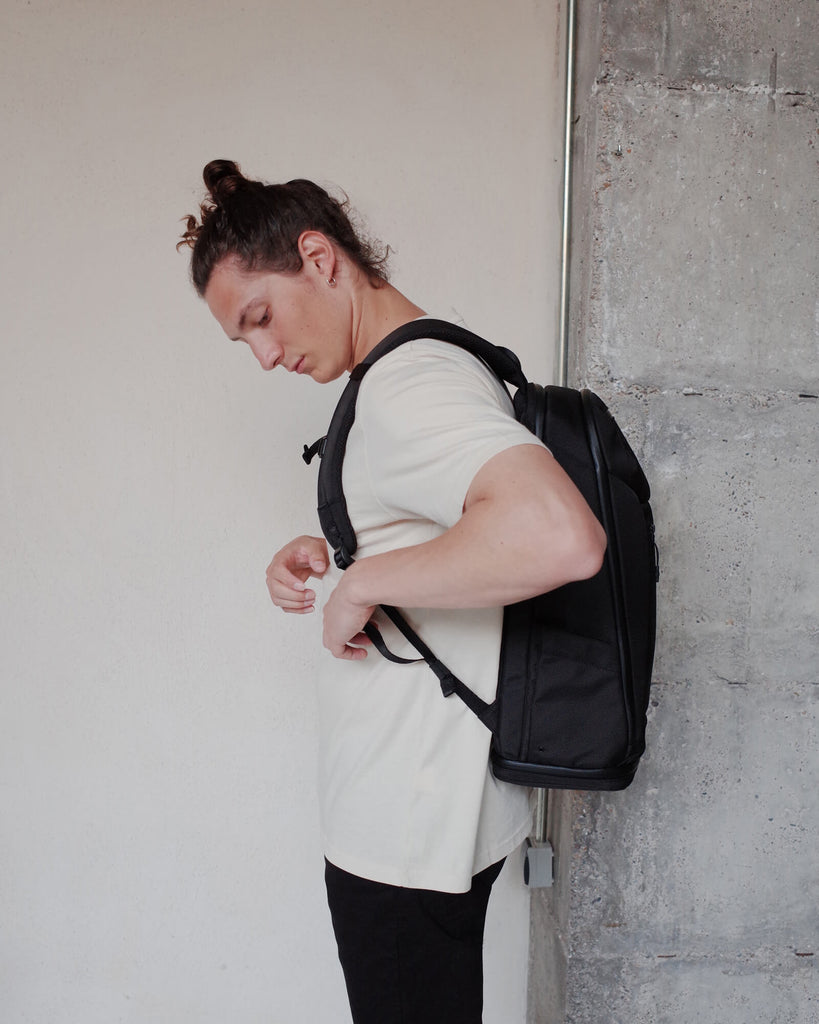
Our flagship travel backpack. After 5 years of improvements based on real traveler feedback, the 360 Backpack is the best option for those seeking maximum functionality in a minimalist design.

Technical Features
- Capacity: 28 liters
- Dimensions: 48 x 30 x 17 cm (suitable for cabin on most airlines)
- Weight: 650 grams (ultralight)
- Material: 100% GRS-certified recycled polyester
- Waterproof: All exterior zippers are heat-sealed
- Zippers: YKK in all compartments

Design thought for travelers
The 360 Backpack includes features that make a difference on long trips:
- Full front opening, suitcase-style: Access all contents without having to pull out item by item.
- Separate compartment for laptops up to 15.6": With maximum padded protection.
- Exclusive bottom opening for shoes: Keep footwear separate from clean clothes.
- Separate section for glasses: Quick access and protection against impacts.
- Front pocket for passport: Documents always accessible.
- Side pocket for bottle: Easy hydration without opening the backpack.
- Front compression strap: Better weight distribution and reduced volume.
- Side handle: Greater versatility for carrying.
- Semi-rigid base: The backpack stands upright (perfect for public transport).
- Interior zippered compartments: Total luggage organization.
- Padded back with trolley strap: Attach the backpack to your suitcase at airports.

Durability designed for years, not seasons
A travel backpack designed for durability is key when looking for a companion that can withstand the demands of constant adventures. Our backpacks are built to endure the wear and tear of travel using high-quality materials and advanced manufacturing techniques.
Every seam is designed with attention to detail, heat-sealed zippers ensure waterproofing, and compartments are thoughtfully designed for all types of travelers. From outdoor expeditions to urban travel, a backpack designed for durability offers the confidence that your belongings will be safe and accessible at all times.
Opting for a backpack that prioritizes longevity is a smart investment for the conscious traveler, guaranteeing a reliable travel companion for many adventures to come.
Slim Backpack: urban minimalism for daily use
For those who don't need 28 liters but are looking for a waterproof, functional, and sustainable backpack for daily use, we created the Slim Backpack.

Technical Features
- Capacity: 17.6 liters (extendable with zipper)
- Dimensions: 40 x 30 x 10 cm
- Weight: 550 grams
- Material: 100% GRS-certified recycled polyester
- Waterproof: Heat-sealed outer zippers
-
Zippers: YKK

Perfect for
- Going to the office or university
- Weekend getaways
- Daily urban use
- Carrying a laptop + documents + a change of clothes

Smart design
- Extendable main compartment: Increase capacity when needed
- Reinforced separate compartment for 15.6" laptop: Maximum protection
- Front pocket for keys and passport: Quick access to essentials
- Two side pockets for bottles: Hydration always available
- Interior zippered pocket: Organize charger and mouse
- Front closure: Better weight distribution
Sustainable accessories: complement your luggage

Multifunctional waterproof toiletry bag
Our toiletry bag is not just for cosmetics. Its versatile design allows it to be used as:
- Travel toiletry bag
- Camera and accessories hand bag
- Cable and charger organizer
- First aid kit

Features
- Dimensions: 21 x 13 x 8 cm
- Capacity: 2 liters
- Weight: 150 grams
- Material: GRS-certified recycled polyester
- Zipper: Heat-sealed YKK (100% waterproof)
- Interior: Zippered pocket + elastic mesh for organization
Laptop sleeves: minimalist protection
Waterproof sleeves specifically designed to protect your computer without adding unnecessary bulk to your luggage.

Features
-
Available sizes:
- 13/14 inches: 25 x 34 cm
- 15/16 inches: 29 x 39 cm
- Material: GRS-certified recycled polyester
- Certifications: ISO 9001 and BSCI
- Zippers: Heat-sealed YKK
- Interior: Soft and padded for maximum protection
- Design: Top opening for easy access + secondary back pocket
- Color: Black (matches any style)
GO TO THE RECYCLED LAPTOP SLEEVE
Advantages of recycled polyester over other sustainable materials
Recycled polyester vs. organic cotton
Advantages of rPET:
- Natural waterproofing (cotton absorbs water)
- Quick-drying (crucial for travel)
- Higher wear resistance
- No cultivation required (saving water and land)
- Lower CO2 emissions in production
Advantages of organic cotton:
- Biodegradable at the end of its useful life
- More natural feel
- Superior breathability
Conclusion: For backpacks and luggage, rPET is superior due to its waterproofing and durability.
Recycled polyester vs. innovative materials (cork, hemp, etc.)
Materials like cork or hemp are interesting options, but they have limitations:
- Cork: Excellent material, but more expensive, less resistant to intense wear, and difficult to certify.
- Hemp: Very sustainable in cultivation, but not naturally waterproof and requires additional treatments.
- Recycled cotton: A good option, but it absorbs water and is less durable than rPET.

rPET offers the best balance between sustainability, functionality, durability, and cost.
How to care for your recycled polyester backpack to make it last for years
Recommended cleaning
- Regular cleaning: Use a damp sponge with mild soap for surface stains.
- Deep cleaning: Hand wash with cold water and neutral soap (avoid washing machine).
- Drying: Let it air dry, never in a dryer.
-
Zippers: Clean zippers with a soft brush to maintain their function.
Storage
- Store the backpack in a dry and ventilated place.
- Do not store it compressed for long periods.
- Empty all compartments before storing it.
Comparison: Minimalism Brand vs. other sustainable backpack brands

Fjällräven Re-Kånken
The famous Swedish backpack also uses recycled polyester (11 PET bottles per backpack) with SpinDye technology to reduce water and chemicals in dyeing.
Similarities:
- 100% recycled polyester
- Minimalist design
- Durability
Differences:
- Re-Kånken: more school-oriented design, fewer technical compartments
- Minimalism 360: travel-oriented design, front opening, specialized compartments
- Price: Re-Kånken is usually more expensive

Lefrik
European brand of ecological backpacks with recycled PET.
Similarities:
- Recycled material
- Urban design
Differences:
- Lefrik: more focused on fashionable urban design, small sizes
- Minimalism: more functional for travel and intensive use

Patagonia
A global leader in sustainability, also manufactures backpacks from recycled nylon and polyester.
Patagonia Advantages:
- Established brand with 20+ years in recycled materials
- Full transparency in the supply chain
- Developed repair program
Minimalism Advantages:
- More accessible price
- Specific design for minimalism (less is more)
- Repair reimbursement service
Frequently asked questions about sustainable backpacks
Are recycled polyester backpacks as durable as virgin polyester ones?
Yes. At a molecular level, rPET is identical to virgin polyester. It has the same properties of strength, durability, and elasticity. The difference lies exclusively in its origin (recycled vs. petroleum) and its lower environmental impact.
Are they really waterproof?
Our backpacks are water-repellent, and all exterior zippers are heat-sealed, making them waterproof under normal rain conditions. For torrential downpours or total immersion, we recommend using an additional waterproof cover.
How many PET bottles are needed to make a backpack?
Approximately 25 0.5-liter PET plastic bottles are needed to manufacture a medium-sized backpack (like our 360 Backpack).
Does recycled polyester release microplastics?
Yes, like any synthetic material (including virgin polyester), rPET can release microplastics during washing. That's why we recommend:
- Washing only when necessary.
- Using special washing bags to capture microfibers (like Guppyfriend).
- Hand washing when possible.
However, the total environmental impact of rPET is still much lower than that of virgin polyester.
Can an rPET backpack be recycled at the end of its life?
Technically, yes, although fiber-to-fiber textile recycling is not yet developed on an industrial scale. That's why at Minimalism Brand:
- We design for maximum durability (to last 10+ years).
- We encourage repair over replacement.
- We offer a collection program to give products a second life or recycle them properly.
Why don't you manufacture backpacks in Europe?
It's a question we constantly ask ourselves. The reality is that 98% of our production (clothing) IS manufactured in Spain and Portugal. Backpacks represent the 2% we still manufacture in Vietnam because:
- The technical infrastructure for backpacks with our specifications (heat-sealing, multiple compartments, etc.) does not yet exist in Europe with the necessary quality.
- We maintain BSCI audits and GRS certifications regardless of where they are manufactured.
- We offset the carbon footprint of transport.
Our goal is to relocate when it is technically feasible without compromising quality.
The future of sustainable backpacks: innovations in progress
Fiber-to-fiber recycling
Chemical recycling technology is advancing. Soon, it will be possible to recycle old rPET backpacks directly into new high-quality rPET, completely closing the loop.
Bio-based materials
Companies like Tentree already use BLOOM foam (made from algae) for fillings. The future will see more innovative materials that combine biological origin with durability.
Conclusion: a sustainable backpack is a long-term investment
Choosing a sustainable travel backpack made from recycled polyester is not only good for the planet; it's a smart decision for your wallet and your travel experience.
Recapping why an rPET backpack is the best choice:
- Measurable environmental impact: Each backpack prevents 1.5 kg of CO2 and gives 25 plastic bottles a second life.
- Durability identical to virgin material: You don't compromise strength or functionality.
- Superior waterproofing: Ideal for any climate.
- Functional minimalist design: Less weight, more organization.
- Verifiable certifications: GRS, ISO, BSCI guarantee what they promise.
- Long-term investment: A backpack designed to last 10+ years is cheaper than buying one every 2 years.
At Minimalism Brand, we have been perfecting our backpacks for over 5 years based on real traveler feedback. They are not designer backpacks or fleeting fashion accessories. They are functional, sustainable, and durable tools for people who value quality over quantity.
Because in the end, the most sustainable product is the one you don't need to replace.
Discover our complete collection of sustainable backpacks and accessories
Our best-selling organic cotton packs