Introduction: the shift towards organic cotton
In 2026, more and more people are wondering what goes into the clothes they wear every day. The basic t-shirt, one of the most common items in any wardrobe, can have a very different environmental and social impact depending on where it comes from.
The difference between an organic cotton t-shirt and a conventional cotton one is not just on the label: it affects the planet, farmers, and your own skin.

What is organic cotton?
Organic cotton is grown without toxic pesticides, synthetic fertilizers, or genetically modified seeds. Its production follows strict ecological standards and is usually certified.
- No harsh chemical pesticides.
- No synthetic fertilizers.
- No genetically modified seeds.
- Sustainable farming practices.
Organic cotton vs. conventional cotton: a quick comparison
| Feature | Organic cotton | Conventional cotton |
|---|---|---|
| Pesticides | No | Yes, intensive use |
| Synthetic fertilizers | No | Yes |
| Soil impact | Regenerative | Soil degradation |
| Skin impact | Fewer irritations | Possible chemical residues |
| Sustainability | High | Low |

5 reasons to choose an organic cotton t-shirt in 2026
1. Fewer chemicals in contact with your skin
Conventional cotton uses pesticides and chemical treatments during its cultivation and processing. Organic cotton reduces these residues, making it ideal for sensitive skin.
2. Lower environmental impact
Organic farming protects biodiversity, improves soil quality, and reduces water pollution.
3. Greater durability
Organic cotton t-shirts are usually made with higher-quality fibers, resulting in garments that retain their shape and softness for longer.
4. More ethical production
Many organic t-shirts are certified by standards that include social and labor requirements.
5. Aligned with more conscious consumption
Choosing organic cotton is a simple way to reduce your environmental impact without changing your style.
Is it really worth paying more?
Although an organic cotton t-shirt may cost slightly more than a conventional one, its greater durability and quality make it more cost-effective in the long run.
- It loses its shape less.
- It holds its color better.
- It lasts for more washes.
How to recognize an authentic organic cotton t-shirt
- Look for certifications.
- Read the composition label.
- Check the brand's transparency.

A simple alternative: t-shirts and packs as the foundation of your wardrobe
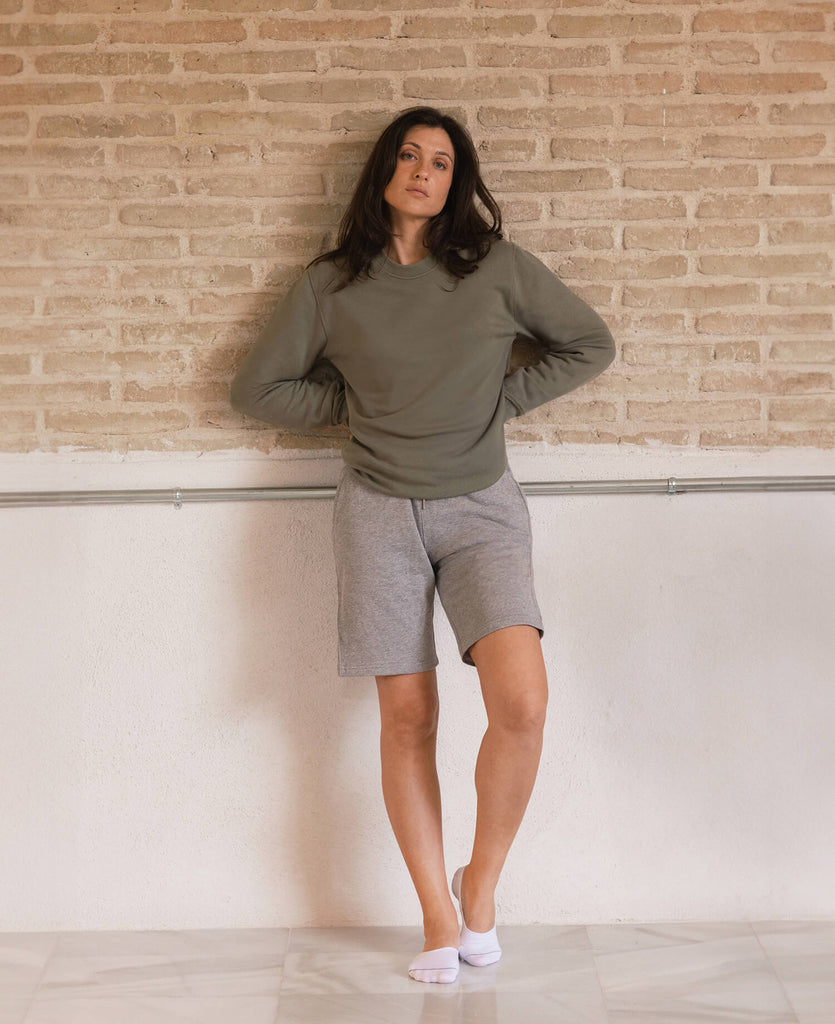
Although sweatshirts and sweaters are essential in cold climates, many people opt for a simpler and more versatile solution: building their wardrobe around quality organic cotton t-shirts and basic packs that work all year round.
This approach reduces decision-making, makes mixing and matching easier, and fits a minimalist, long-lasting wardrobe philosophy.
- A foundation for any look in any season.
- Less bulk and greater versatility.
- Natural and breathable materials.
- Smart shopping in packs.
Minimalism Brand t-shirts: create your custom pack
Mix colors and sizes to create a pack tailored to your wardrobe. Our t-shirts are designed as durable, comfortable basics that are easy to mix and match.
- Available colors: black, white, beige, gray, dark gray, light blue, medium blue, navy blue, olive green, dark green, brown, and burgundy.
- Material: 100% organic cotton.
- Certification: OCS 100.
- Fabric weight: 180 grams.
- Design: crew neck and relaxed fit.
- Care: washing at 30°C recommended.
View organic cotton t-shirts
- 3-pack of logo-free organic cotton t-shirts
- 5-pack of logo-free organic cotton t-shirts
- 7-pack of logo-free organic cotton t-shirts
Conclusion: a small choice with a big impact
Switching to organic cotton t-shirts is a simple decision that improves your daily comfort and reduces your environmental impact.
In 2026, where sustainability and quality are increasingly important, choosing organic cotton is no longer a trend: it is a logical decision.
FAQ: frequently asked questions
Is organic cotton softer?
Yes, it is usually softer because it has not been treated with as many harsh chemicals.
Are all organic cotton t-shirts sustainable?
Not necessarily. It is important to check certifications and brand practices.
Does organic cotton shrink more?
No. If the garment is well-made, its performance is similar to or better than conventional cotton.